Planning a Luxury Aquarium Project in 2026: Key Considerations for Clients and Developers
Introduction
As we move into a new year, many clients, developers, and design professionals begin planning major interior and architectural projects. In 2026, luxury aquariums continue to stand out as one of the most impactful features for high-end residential and commercial environments. However, a successful aquarium installation requires far more than aesthetic vision alone.
Because of this, planning a luxury aquarium project early ensures that design, engineering, and long-term care are aligned from the outset. When approached correctly, an aquarium becomes a seamless architectural element that enhances the space while remaining stable, efficient, and easy to maintain.
Why Early Planning Matters
As a starting point, luxury aquariums are complex systems that interact with structure, interiors, and building services. For this reason, early-stage planning is essential. Integrating an aquarium during the design phase allows architects and developers to avoid costly changes later and ensures the final installation feels intentional rather than added on.
Furthermore, early planning helps to:
- Align the aquarium with architectural layouts
- Account for load-bearing and structural requirements
- Coordinate electrical, plumbing, and ventilation needs
- Ensure long-term access for maintenance
- Protect design integrity and visual impact
As a result, projects that consider the aquarium from the beginning achieve better outcomes both visually and technically.
Defining Purpose and Scale
Before design begins, it is important to establish the role the aquarium will play within the space. In luxury environments, aquariums often serve as focal points, architectural dividers, or experiential features rather than decorative accessories.
Additionally, key considerations include:
- Whether the aquarium is residential or commercial
- The desired visual impact and viewing angles
- The scale and proportion relative to the space
- How does it support the overall interior concept
Consequently, clarifying these elements early ensures that the aquarium complements the project rather than competing with other design features.
Architectural and Interior Integration
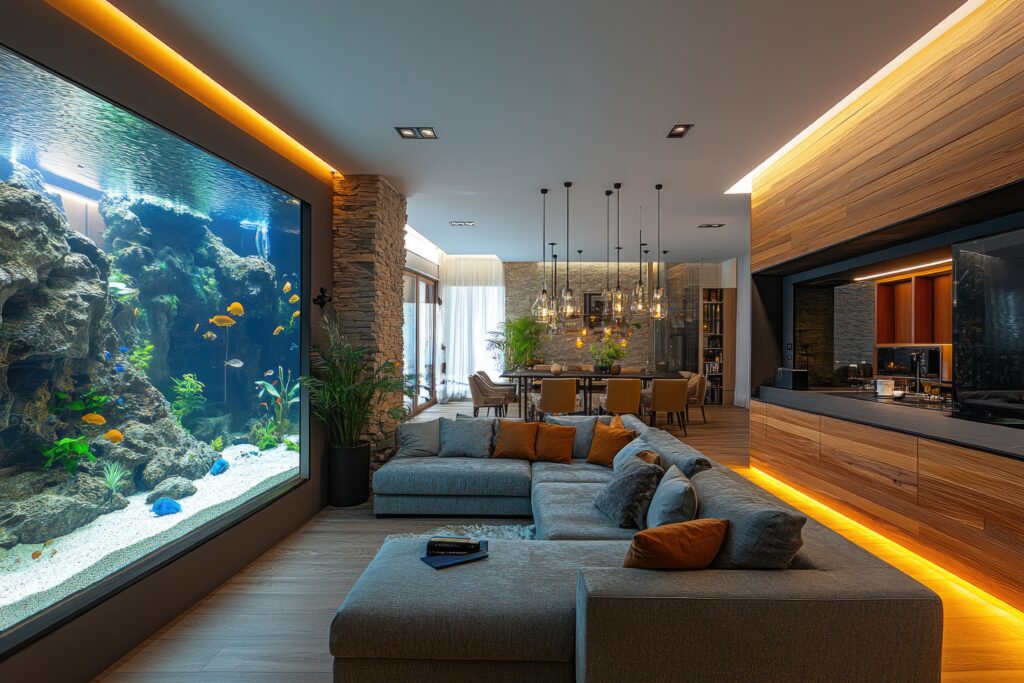
In 2026, most luxury aquariums are designed as fully integrated architectural elements. Rather than freestanding tanks, clients increasingly prefer installations that are built into walls, partitions, or custom joinery.
Therefore, successful integration requires close coordination between:
- Architects
- Interior designers
- Structural engineers
- Aquarium specialists
As a result, this collaborative approach allows the aquarium to enhance spatial flow, reinforce material choices, and align with lighting and finishes throughout the project.
Technology, Filtration, and Life-Support Systems
Behind every luxury aquarium is a sophisticated life-support system. Planning for filtration, water movement, temperature control, and monitoring technology is critical to long-term success.
Modern luxury aquariums often include:
- Advanced filtration and life-support systems
- Automated lighting and feeding schedules
- Remote monitoring and alerts
- Energy-efficient equipment designed for continuous operation
As a result, addressing these technical requirements during the planning phase ensures reliability, water clarity, and animal welfare over the life of the installation.
Maintenance Access and Long-Term Care
A luxury aquarium is a living system that requires ongoing care. Planning for maintenance access is just as important as the visible design.
For this reason, key maintenance considerations include:
- Discreet access points for servicing
- Space for filtration equipment and controls
- Safe and efficient working areas for technicians
- A clear long-term maintenance strategy
When these factors are considered early, the aquarium remains pristine without disrupting daily operations or interior aesthetics.
Budgeting and Timeline Planning
Luxury aquariums are bespoke installations, and budgets should reflect both design ambition and technical complexity. Early planning allows costs to be managed realistically and integrated into wider project budgets.
In addition, timelines should account for:
- Design development
- Manufacturing and fabrication
- Installation and testing
- System stabilisation before full operation
Proper scheduling ensures the aquarium is delivered in line with construction milestones rather than becoming a last-minute addition.
Working With a Specialist Partner
The success of a luxury aquarium project depends heavily on the expertise of the team delivering it. Working with a specialist aquarium company from the outset ensures that design, engineering, and long-term care are handled cohesively.
At Luxe Aquatics, we collaborate closely with clients, developers, architects, and designers to deliver bespoke aquarium systems that integrate seamlessly into luxury environments. Our approach combines architectural understanding, marine expertise, and long-term maintenance planning to ensure every project performs as beautifully as it looks.
Looking Ahead to 2026
As expectations for luxury environments continue to rise, aquariums remain a powerful way to create distinctive, immersive spaces. When planned correctly, they add value, enhance experience, and reinforce design intent.
Therefore, for clients and developers planning projects in 2026, early consideration of a luxury aquarium can make the difference between a striking feature and a truly integrated architectural element.